To elevate the School's internationalization level and research capabilities in ASEAN studies, from January 5 to 6, 2026, Mr. Jiang Wei, CPC Secretary General of China-ASEAN School of Economics, and Prof. Liang Yunwen, Executive Dean of the School, led a delegation of six members to Singapore for a visit and exchange. The delegation visited institutions including the Singapore Chinese Chamber of Commerce and Industry, ISEAS - Yusof Ishak Institute, Singapore Management University, and S. Rajaratnam School of International Studies (RSIS) of Nanyang Technological University.
On the afternoon of January 5, the delegation visited the Singapore Chinese Chamber of Commerce and Industry. The delegation was warmly received by Mr. Bai Yibo, core director of the chamber. The two sides had in-depth discussions. Mr. Jiang Wei introduced the School's educational positioning for ASEAN, its research achievements in ASEAN, and the cultivation of international talents, expressing the School's willingness to fully leverage its disciplinary and geographical advantages to provide intellectual support, policy consultation, and high-end talent supply for Chinese enterprises in Singapore and ASEAN. Both sides agreed to establish a regular communication mechanism, deepen school-chamber and school-enterprise cooperation, and achieve resource sharing, complementary advantages, and mutual benefits.
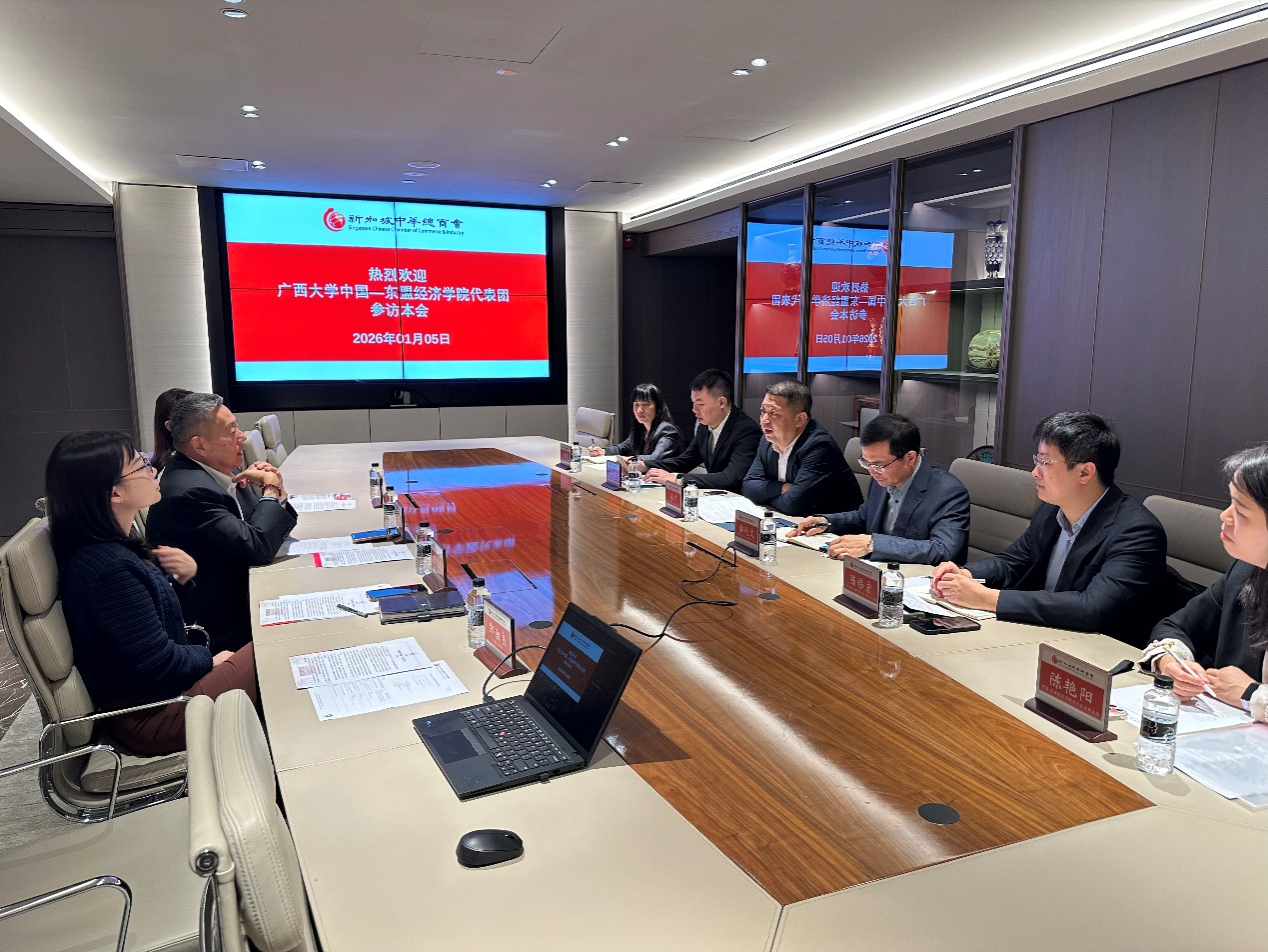
The delegation had a meeting with the Singapore Chinese Chamber of Commerce and Industry
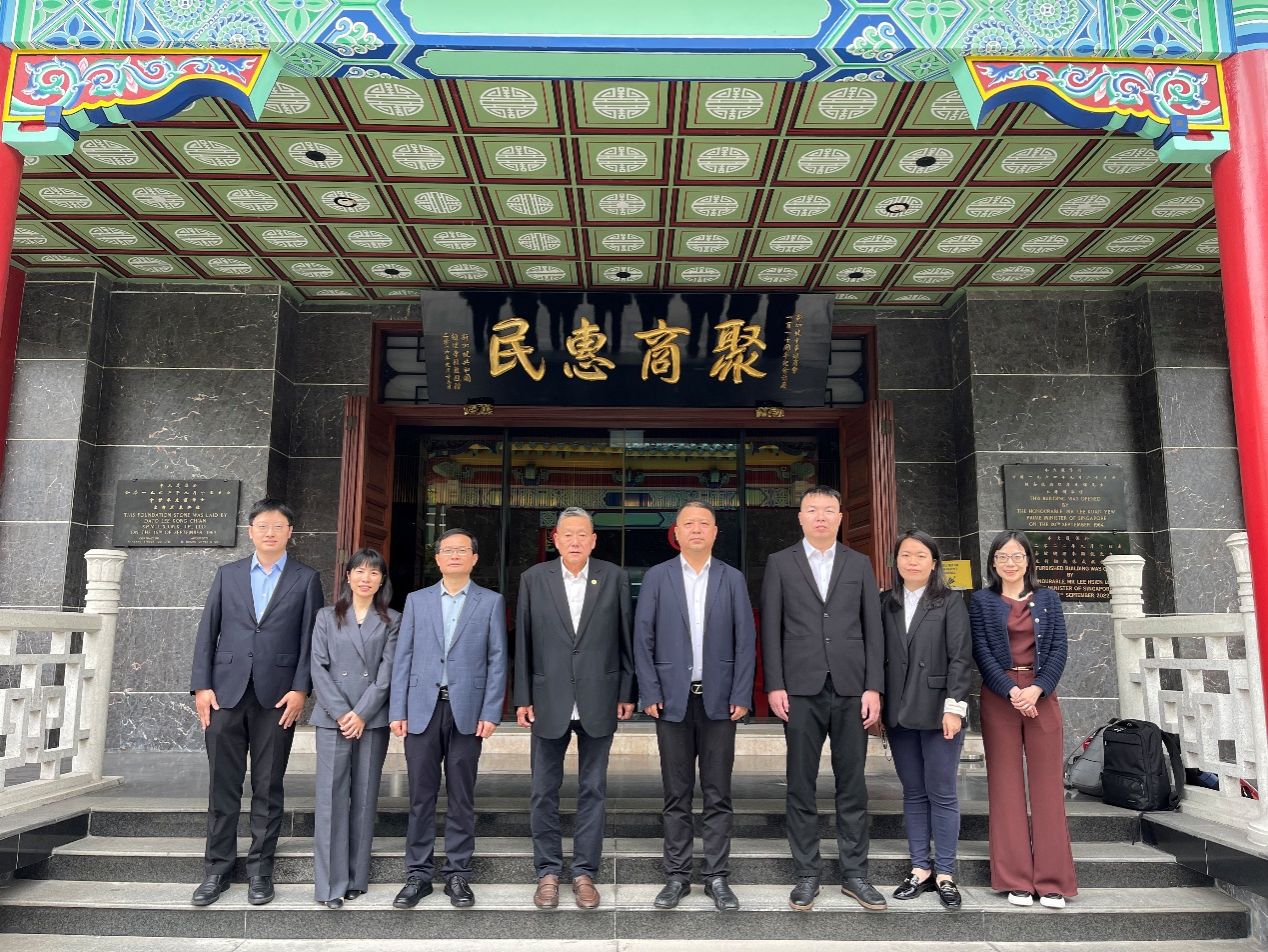
The delegation visited the Singapore Chinese Chamber of Commerce and Industry
On the morning of January 6, the delegation visited ISEAS-Yusof Ishak Institute. Senior Research Fellow and Coordinator of the ASEAN Research Centre, Ms. Joanne Lin, Chief Research Fellow Ms. Melinda Martinus, and Research Officer Ms. Gauri Sasitharan had a meeting with the delegation. Mr. Jiang Wei provided a detailed introduction to the development history, core strengths, and distinctive features of the School. Prof. Liang Yunwen systematically elaborated on the latest progress and achievements of the China-ASEAN Institute in regional country studies, China-ASEAN economic and trade cooperation, and think tank platform development. Ms. Joanne Lin comprehensively presented the research projects and activities of ISEAS, with a focus on sharing key findings from "The State of Southeast Asia: 2025 Survey Report." Both sides engaged in in-depth discussions on topics of mutual interest, including deepening the socioeconomic development trends of Southeast Asia, China-ASEAN relations, regional security, and economic integration. They reached positive consensus on establishing academic information-sharing mechanisms, jointly organizing international seminars, conducting collaborative research and publications, and exchanging scholars for academic visits. Both sides agreed that strengthening think tank cooperation would better serve the building of a China-ASEAN community with a shared future, promote the production of high-quality research outcomes, and contribute wisdom and strength to regional stability and prosperity.
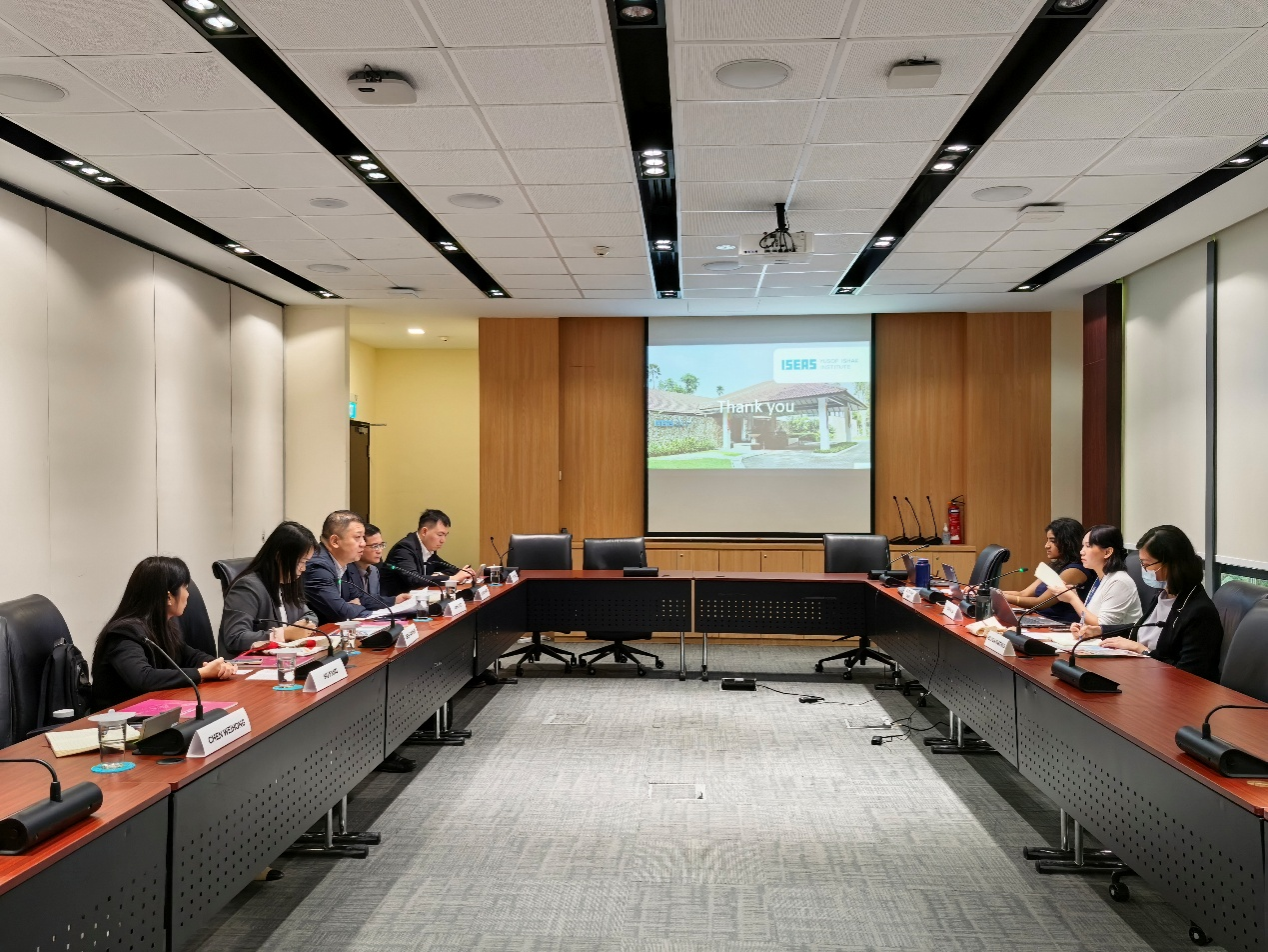
The delegation had a meeting with ISEAS-Yusof Ishak Institute
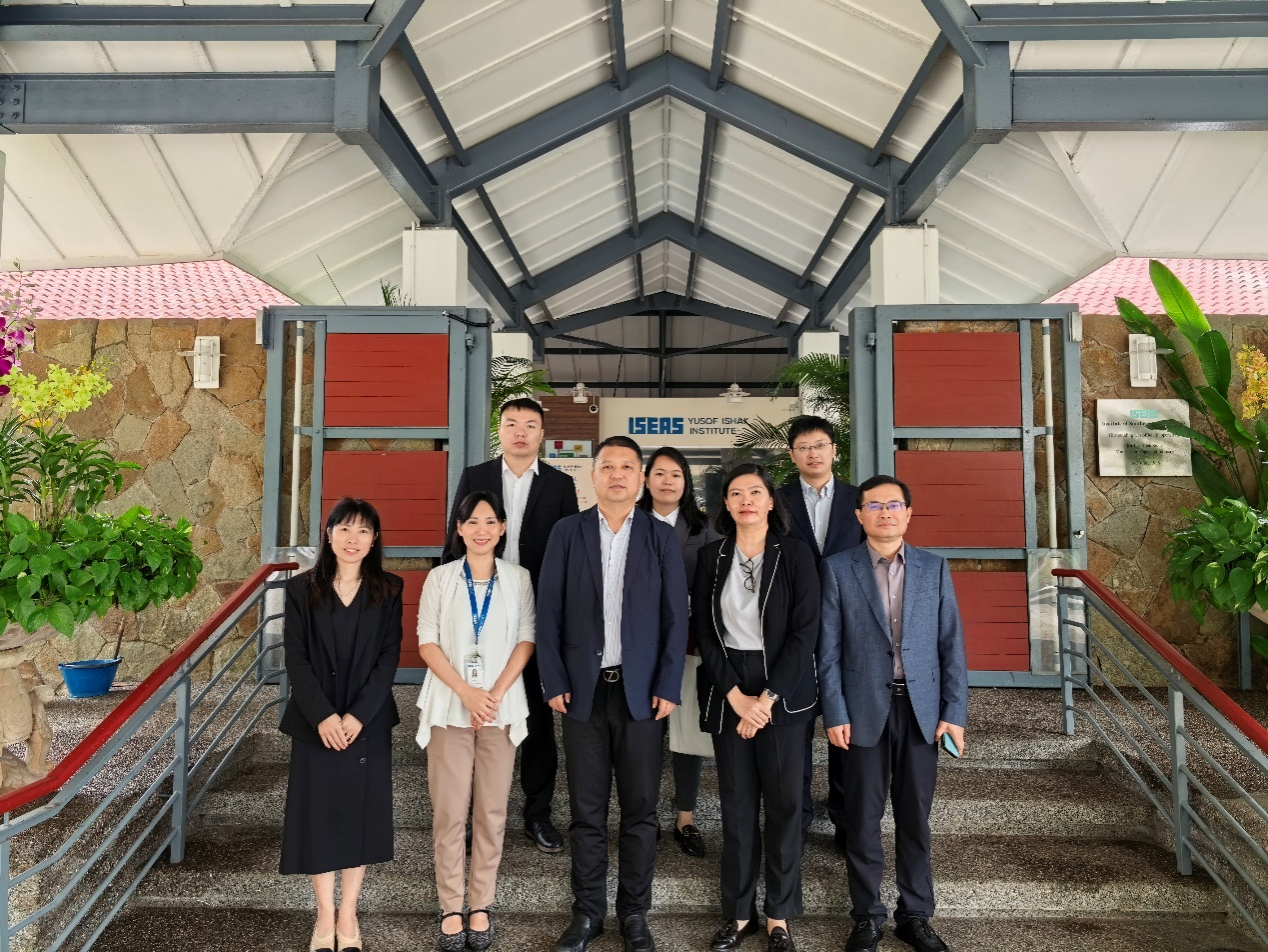
The delegation visited ISEAS-Yusof Ishak Institute
In the afternoon, the delegation visited Singapore Management University (SMU). The university staff warmly welcomed the delegation and guided them through key facilities. Through on-site visits and interactive exchanges, delegation members gained an in-depth understanding of SMU's distinctive educational features.
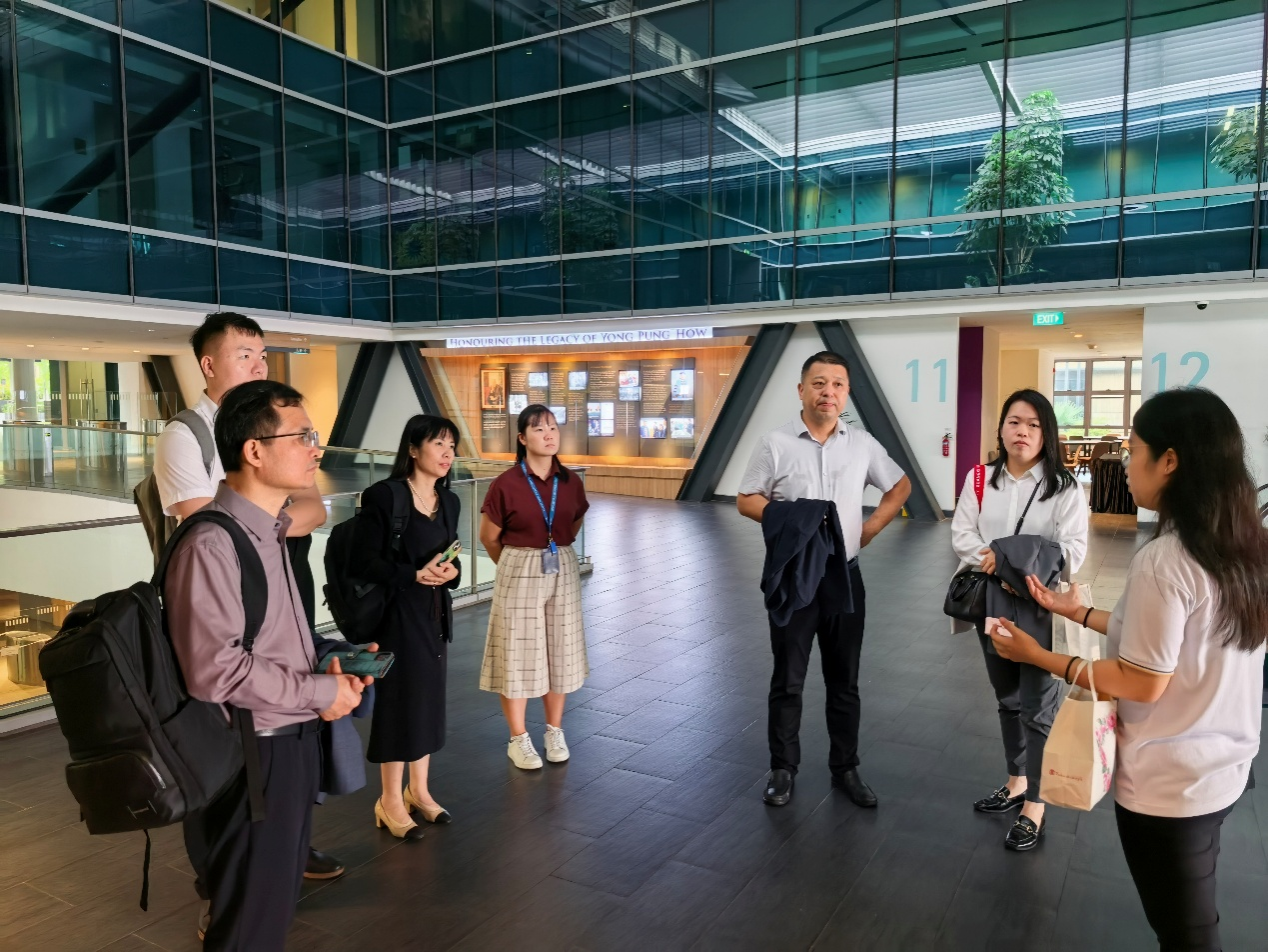
The delegation visited Singapore Management University
Subsequently, the delegation visited the S. Rajaratnam School of International Studies (RSIS) at Nanyang Technological University. Assoc. Prof. Li Mingjiang, Provost’s Chair in International Relations at RSIS, warmly received the delegation and presided over a meeting. Mr. Jiang Wei provided a detailed introduction of the School, emphasizing the School's positioning rooted in Guangxi and oriented toward ASEAN. This visit aims to further strengthen exchanges and collaboration with RSIS in talent cultivation, academic research, and think tank cooperation related to ASEAN. Prof. Liang Yunwen systematically introduced the current status and positioning of the China-ASEAN Research Institute, expressing sincere gratitude to Assoc. Prof. Li Mingjiang for his long-term contributions to academic interaction, resource sharing, and preliminary support, and looking forward to deepening cooperation in joint research, scholar exchanges, and mutual learning of resources. Assoc. Prof. Li Mingjiang comprehensively outlined the educational history, core research fields, governance models, and outstanding achievements in talent cultivation and policy consultation of Nanyang Technological University and RSIS. Both sides engaged in in-depth discussions on major issues of common concern, such as international relations, strategic research, and ASEAN regional cooperation, building on the foundation of previous academic interactions and resource sharing. They explored practical cooperation pathways, including scholar exchanges, sharing of research findings, invitation of expert lectures, and employment recommendations for outstanding doctoral students. Mr. Jiang Wei emphasized that the school will actively leverage its strengths in ASEAN studies, deepen academic exchanges and cooperation with RSIS, achieve resource sharing, mutual learning of achievements, and win-win outcomes, and contribute more academic wisdom and policy support to serving the building of the China-ASEAN community with a shared future and promoting peace and stability in the Asia-Pacific region.
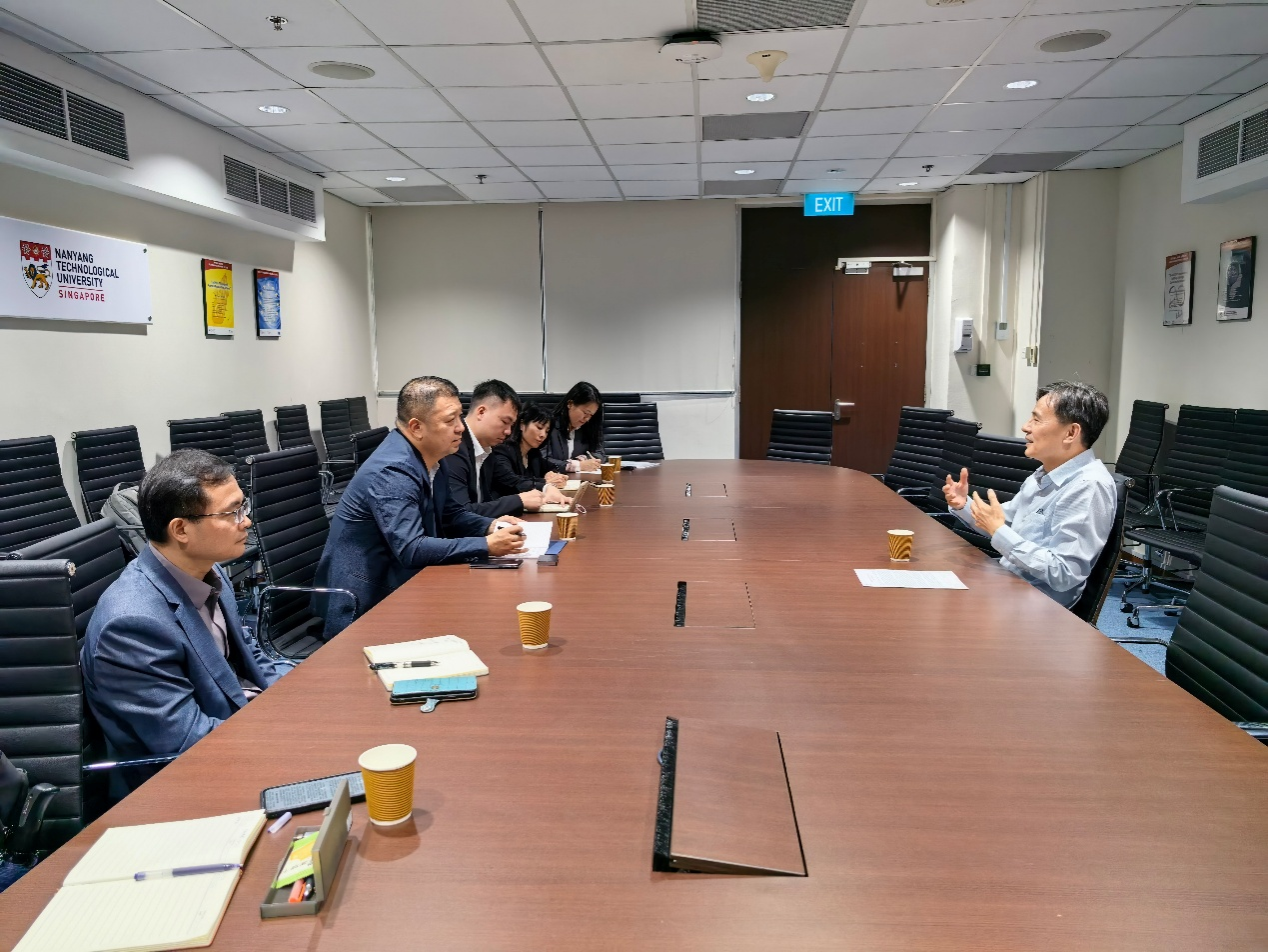
The delegation had a meeting with RSIS of Nanyang Technological University
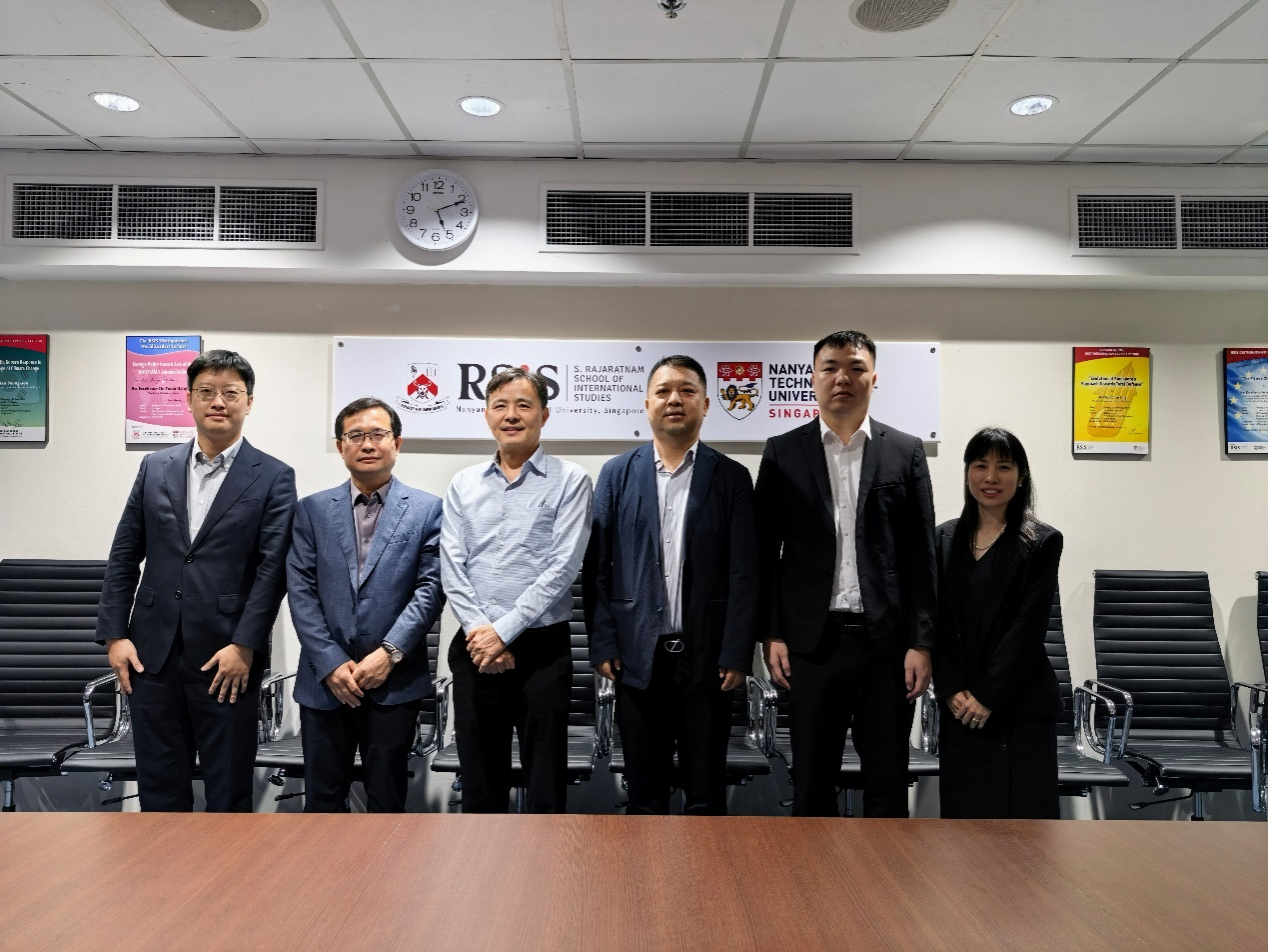
The delegation visited RSIS of Nanyang Technological University
This visit to Singapore has further consolidated the friendly relations between the School and Singaporean universities, think tanks, and key business institutions, expanded the international cooperation network targeting developed economies in ASEAN, and injected strong momentum into deepening ASEAN studies, enhancing the internationalization of education, and advancing the construction of the School.
Written by Chen Weihong
Translated by AI
Proof Read by Yu Na, Chen Yanyang
Edited by Gan Ziying
Reviewed by Gong Zheng


 Wechat
 ADD:No.100 Daxue Road, Nanning, Guangxi, China
 Tel/Fax:+86-0771-3186687
 Email: